Jul
26
2009
“In the sweat of your face you shall eat bread till you return to the ground…” (Genesis 3:19)
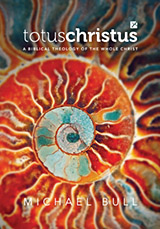
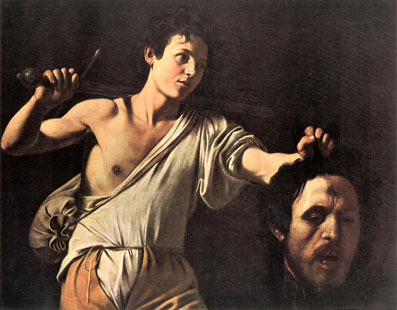
The book of Judges continually uses the imagery of the crushing of the heads of the Lord’s enemies, whether this is literal skulls or heads of state. The Bible makes a big deal of heads and bodies, whether this is the sacrifices picturing the totus Christus, or His rival, Gog and Magog.
Continue reading
Comments Off | tags: Atonement, David, Gethsemane, goliath, High Priest, Moses, Typology, Uzziah | posted in Biblical Theology
Jul
26
2009
My friend Matt has been blogging about how postmodernism, with its openness to narrative, is a great opportunity for the gospel. But evangelicals need to sort themselves out first. Otherwise, to the world, they are just a bunch of Patsys. Patsy Biscoes that is.
Continue reading
4 comments | tags: Archaeology, Compromise, Gnosticism, Ideology, James Jordan, Liberal theology, N. T. Wright | posted in Apologetics, Biblical Theology
Jul
25
2009
or Worship-styles of the Bitter and Twisted
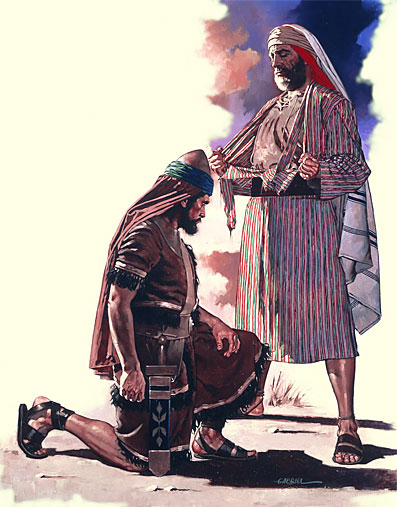
Under Rehoboam, Solomon’s kingdom became even more like Egypt. Solomon had imposed greater taxes upon his people than were appropriate, and his son Rehoboam took this to the extreme. So the Lord brought about a new Exodus, with Jeroboam as a kind of Moses. David felt guilty for cutting the corner off Saul’s robe — ie. grasping at Saul’s symbol of office — but to Jeroboam the prophet gave ten of the twelve pieces of his robe, the ten northern tribes.
Continue reading
Comments Off | tags: Aaron, David, Egypt, Golden, Jeroboam, Moses, Saul, Solomon | posted in Biblical Theology, Christian Life
Jul
24
2009
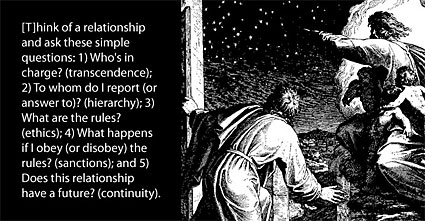 Eric Rauch describes one of the greatest theological discoveries of our time, one which hardly anyone has heard of yet after 20 years.
by Eric Rauch
One of the enduring Latin phrases of the Protestant Reformation is the impressive sounding ecclesia semper reformans, semper reformanda. In plain English, this means “the church is always reformed and always reforming.” This simple principle is one that is most often forgotten in modern discussions about theology, where a surefire way to end a disagreement is to pull out something written by Luther, Calvin, or even Spurgeon and show that they said much the same thing. Although the Reformers themselves were quite emphatic that they were not the final word (hence the “always reforming”), contemporary Christianity seems to be convinced that dead theologians should be the authoritative standard of interpretation.
Continue reading
Comments Off | tags: Covenant Theology, Ray Sutton, Reformers | posted in Biblical Theology
Jul
24
2009
Time for another weird post I think. Here’s some thoughts on Genesis 2:
“This at last is bone of my bones and flesh of my flesh;
she shall be called Woman, because she was taken out of Man.”
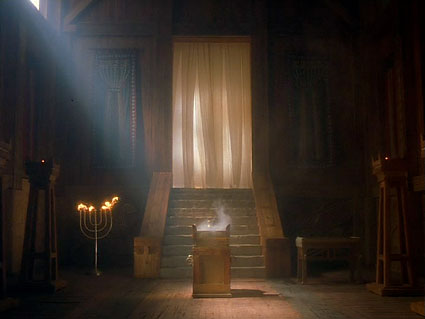
Why the change from Adam and Eve to Ish and Isha? Perhaps because the words are symbolic, and symbols describe relationships.[1] There is the possibility that these words were used because they sound like eish (fire), regardless of their differing derivations (the jury is still out on this one after 6000 years). Jordan mentions that Adam was to be an Altar made of earth, and with his own blood shed comes the “fire” of Isha, the woman as the shining on the altar, the glory cloud on Mount Sinai. It certainly corresponds with the feasts. Adam “ascends” to headship over Eve in marriage (Firstfruits), and then he is to “open the Law” to Eve and fill her with light (Pentecost), which he did, but failed to repeat the Law (Trumpets) after she was tested. Atonement followed.
Continue reading
2 comments | tags: AD70, Adam, breastplate, Eve, Feasts, Genesis, Greater Eve, Incense Altar, Lampstand, Man of sin, Scavengers, Tabernacle, Temple | posted in Biblical Theology
Jul
22
2009
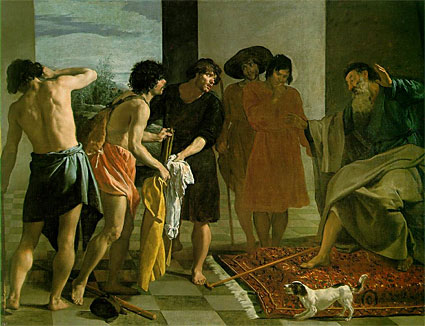
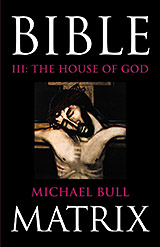
The first ‘cycle’ in the Joseph narrative wasn’t covered in Totus Christus. I have included it in Bible Matrix, and it contains some wonders.
Firstly, Joseph’s first dream (the bowing sheaves) is placed at Firstfruits – Day 3. His second dream (sun moon and stars) is at Pentecost – Day 4.
Secondly, Joseph receives his robe from Jacob at Passover (covering). It symbolises the firmament (Day 2). And his brothers cover it with goat’s blood at Atonement (covering). It symbolises the substitutionary animals and mediatory Man (Day 6). The giving and taking of the robe match chiastically.
Of course, these Scriptures predate the feasts in Leviticus 23.
Comments Off | tags: Atonement, Bible Matrix, Chiasm, Feasts, Firstfruits, Jacob, Joseph, Systematic typology, Veil | posted in Biblical Theology
Jul
21
2009
or Cutting Off the Generations of the Wicked
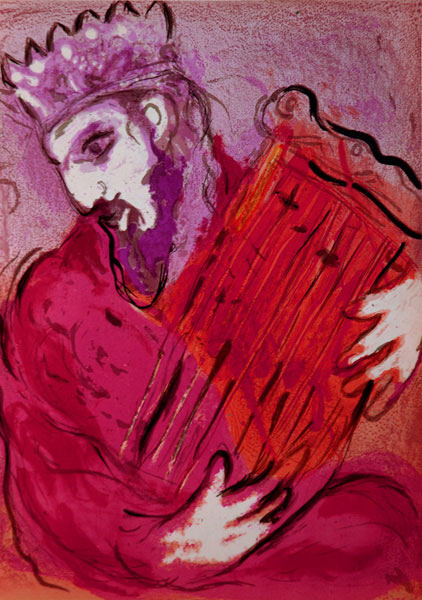
O daughter of Babylon, who are to be destroyed, Happy the one who repays you as you have served us! Happy the one who takes and dashes your little ones against the rock!
(Psalm 137:8-9)
A further comment on Psalm 137 (following Church and State and Liturgy as Prophecy):
The church has the power to excommunicate, but the state alone has the power to execute. In Joshua’s and David’s time, church and state were one, thus Israel’s army slaughtered God’s enemies judicially. In Mordecai’s time, the slaughter of Haman’s followers by the Jews occurred only after church and state became one under Mordecai’s new executive power.
You must be logged in to see the rest of this post.
Join now for a year for $15!
As an advisor to the state, the church gives the word, and offers the sacraments, but it is always the state that carries out the judgment — government. The state is the “outer court” into which the living sword-water flows. Some taste life and others taste death. [1]
Continue reading
Comments Off | tags: AD70, Babylon, Joshua, Mordecai, Nebuchadnezzar, Psalms, Zedekiah | posted in Biblical Theology, The Last Days, The Restoration Era, Totus Christus
Jul
19
2009
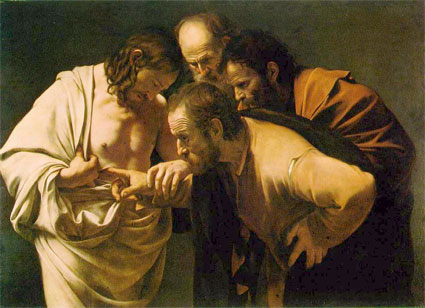
Sabbath - Then, the same day at evening, being the first day of the week,
…..Passover - when the doors were shut where the disciples were assembled,
…..for fear of the Jews,
Continue reading
Comments Off | tags: Feasts, John, Literary Structure, Passover, Systematic typology | posted in Biblical Theology
Jul
18
2009
or The Holy Voodoo Doll
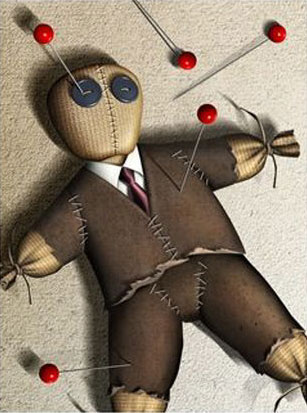
The Lord’s plan from the beginning has been to take each man through three stages of development before transfiguration. The first is to give him access to the Tree of Life (bread) and test his obedience as a priest. Adam failed this test. The second is to give him access to the Tree of the Knowledge of Good and Evil (wine) and test his wisdom as a king. Solomon failed this test. The third is to give him access to and membership of God’s council of elders as a decision maker, one whose words in and of themselves change history. This is testing as a Prophet, one who has been willing to be broken bread and poured out wine, and whose final years are spent giving wise words to the next generation.[1] The Old Covenant prophets passed this test.
Continue reading
1 comment | tags: Abortion, Judas, Liturgy, Pentecost, Solomon, The Prophets | posted in Biblical Theology, Ethics
Jul
18
2009
Genesis (Sabbath) – Grace and peace (Shalom in Christ)
[Ephesians 1]
…..Exodus (Passover) – Children of wrath made members of the
…..household of God by the blood of Christ [Ephesians 2:1-17]
……….Leviticus (Firstfruits) – Access to the Father as the dwelling
……….place of God. The mystery of God opened [Ephesians 2:18-3:12]
……………Numbers (Pentecost) – Filled with all the fullness of God,
……………strengthened with might through His Spirit [Ephesians 3:13-21]
……….Deuteronomy (Trumpets) – Law repeated. The troops presented
……….to God. Inheritance. Music [Ephesians 4:1-6:9]
…..Joshua (Atonement) – Every saint wears the armour
…..of the High Priest [Ephesians 6:10-18]
Judges (Tabernacles) – Paul the ambassador to the Gentiles
[Ephesians 6:19-24]
Comments Off | tags: Ephesians, Literary Structure, Paul, Systematic typology | posted in Biblical Theology